Forestry Economics

Lab Seminar: Sam Evans (CAL FIRE)

This week, Sam Evans presented in the Lab. Sam is a research economist in the Fire and Resource Assessment Program (FRAP) at CAL FIRE. He is part of the agency's risk and hazard mitigation branch and also does work on California's timber and forest products sectors. Sam provided an overview of the program, the use of applied research in the agency, the need for more economics, and opportunities for funding and collaboration. 

Lab Seminar: Ignacio Oliva

This week, ARE PhD candidate Ignacio Oliva presented his ongoing work with Bruno Pimenta, entitled "Unintended consequences of nature-based climate mitigation: Exotic natural capital and water scarcity."

Nature-based climate mitigation strategies aim to enhance carbon sequestration by protecting or restoring natural habitats. Additionally, these strategies can improve the provision of ecosystem services. However, these strategies can damage local ecosystems if they prioritize monoculture of exotic species.

Lab Seminar: The Differential Responses of Farmers on Private and Public Lands to Droughts in the Brazilian Amazon

ARE PhD candidate Bruno Pimenta presented his work on how deforestation in the Amazon responds to drought, and how this response differs between private and public land. Climate change has made drought events in the Amazon more frequent. Manmade deforestation can further deteriorate the region's climate, and weather conditions may also influence a farmer's decision to deforest. The Brazilian Amazon is a mosaic of public and private lands, and farmers in public lands may not have incentives to manage their lands sustainably.

Lab Seminar: Tropical forest protection and land clearing fires in Indonesia

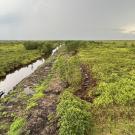
Yuexuan (Kelly) Wu presented ongoing research on the impact of a deforestation moratorium in Indonesia. Since 2000, Indonesia has seen a 17% reduction in forest cover. Much of the forest loss can be attributed to fires that are used to permanently clear land for agriculture. If the moratorium is effective, we should expect that land-clearing fire activity decreases in areas impacted by the moratorium relative to areas that are not impacted by the moratorium.

Lab Seminar: Modeling externalities from forest management and fire mitigation

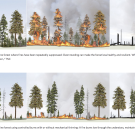
Frederik Strabo presented preliminary work modeling how competition between adjacent landowners can shape their incentives to invest in forest fire prevention. The combination of historical land use practices and climate change have greatly increased the risk and severity of forest fires. Landowners can mitigate these risks by investing in costly interventions like forest thinning. They can also adjust to these risks by changing when (and if) they harvest the trees in their forests.